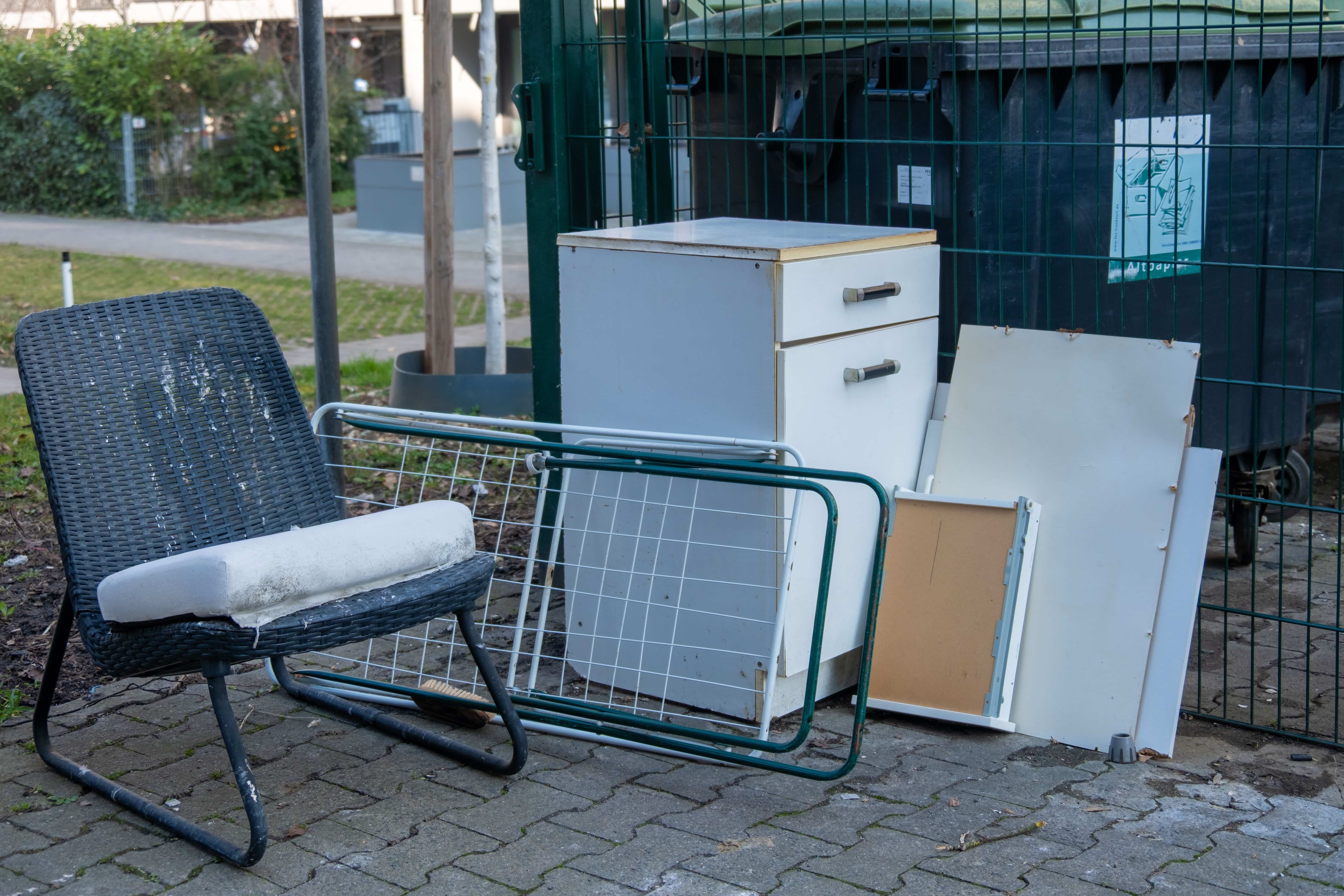
London flats are notoriously compact. Whether you're in a Victorian conversion in Brixton, a purpose-built block in Canary Wharf, or a shared house in Hackney, space is always at a premium — and clutter accumulates fast. If your flat has reached the point where you're navigating around furniture, can't open cupboard doors, or feel a knot of anxiety every time you walk through the front door, this guide is for you.
Clearing an overcrowded flat isn't just about throwing things away. It's a strategic process that, when done correctly, transforms your living environment, reduces stress, and — if you're moving, renting out, or dealing with a probate property — significantly increases its value and appeal.
This room-by-room rubbish clearance guide covers everything: what to tackle first, how to sort items responsibly, what London residents legally need to know about waste disposal, and when professional flat clearance services are the smarter, safer, and more cost-effective choice.
Quick Answer: What Is the Fastest Way to Clear an Overcrowded Flat in London?
The fastest and safest option is to sort items room by room, separate waste by type, and use a licensed London clearance team for heavy lifting, transport, and legal disposal documentation. For most 1- to 2-bedroom flats, professional flat clearance is usually completed within the same day.
At a Glance: Best Approach for Flat Clearance in London
- Start with access routes (hallway, doors, stairs) before clearing rooms
- Sort into Keep, Donate, Recycle, and Dispose to avoid decision fatigue
- Separate specialist waste early (WEEE, mattresses, chemicals)
- Prioritise legal disposal to avoid fly-tipping fines
- Use licensed same-day services when deadlines or heavy items are involved
Why London Flat Clearances Are Uniquely Challenging
Before diving into the room-by-room breakdown, it helps to understand why clearing a flat in London presents specific challenges that don't apply in more spacious parts of the UK.
- Limited access: Many London properties have narrow staircases, no lift, or restricted building access — making large item removal genuinely difficult.
- Parking restrictions: Bringing a van close to the property often requires permits, particularly in controlled parking zones across boroughs like Westminster, Camden, or Islington.
- Fly-tipping penalties: Leaving items on the pavement or in communal areas is illegal and can result in fines of up to £400 from your local council, or even prosecution.
- Tight living spaces: Decluttering in a small flat means you have nowhere to stage items — everything needs a clear plan from the outset.
- High tenant turnover: If you're a landlord or letting agent dealing with a vacated property, time pressure and inventory conditions add complexity.
Understanding these constraints shapes how you approach the clearance from the very beginning.
Step 1: Before You Start — Plan Your Flat Clearance Properly
Rushing into a clearance without a plan is the single biggest mistake London residents make. Here's how to set yourself up for success.
Assess the Volume of Rubbish
Walk through every room and estimate how much needs to go. Think in terms of:
- Van loads (a typical London flat clearance ranges from 1 to 3 van loads)
- Categories of waste: general rubbish, bulky furniture, electrical items (WEEE), hazardous materials, items for donation or resale
Decide: DIY or Professional Clearance?
| Factor |
DIY Clearance |
Professional Flat Clearance |
| Cost |
Lower upfront |
Higher upfront, lower hidden costs |
| Time |
Days to weeks |
Hours to one day |
| Physical effort |
High |
None |
| Disposal compliance |
Your responsibility |
Handled by licensed operators |
| Large/heavy items |
Very difficult alone |
Included in service |
| Best for |
Light decluttering |
Full or heavily cluttered flats |
For genuinely overcrowded flats in London, professional flat clearance services almost always deliver better results faster and more safely than the DIY approach — especially when bulky furniture, appliances, or hazardous waste is involved.
Gather Your Supplies
If going DIY or doing a partial clearance:
- Heavy-duty black sacks (not standard bin bags — they split)
- Cardboard boxes for donations/resale items
- Marker pens for labelling
- Protective gloves
- Disinfectant spray
- A printed floor plan or notebook to track progress room by room
Step 2: The Room-by-Room Rubbish Clearance Guide
🛋️ Living Room
The living room is often the most visible space and a great starting point psychologically — clearing it creates immediate momentum.
Common clutter sources:
- Old magazines, newspapers, and catalogues
- Broken or outdated electronics (TVs, DVD players, gaming consoles)
- Unused furniture or furniture that doesn't fit the space
- Decorative items, picture frames, and knick-knacks
- Old remote controls, cables, and chargers
How to clear it effectively:
- Start with flat surfaces — clear coffee tables, shelves, and windowsills first.
- Sort everything into four piles: Keep | Donate | Sell | Rubbish
- Bag all genuine rubbish immediately and move it to one central collection point.
- For large furniture, measure doorways before attempting removal — many London flat doors are narrower than standard.
- Electronics must be disposed of as WEEE (Waste Electrical and Electronic Equipment) — not in general rubbish. Take them to a local recycling centre or arrange a WEEE disposal and recycling collection through a licensed waste carrier.
Expert Tip: Don't try to sell everything. Holding items "to sell later" is how overcrowding happens in the first place. Donate to local London charities like the British Heart Foundation or Emmaus — they often collect for free.
🍳 Kitchen
Kitchens contain some of the most varied — and potentially hazardous — waste in any flat clearance.
Common clutter sources:
- Expired food, tinned goods, condiments
- Broken appliances (toasters, kettles, microwaves)
- Duplicate cookware and utensils
- Old cleaning products
- Carrier bags, packaging, and general waste
How to clear it effectively:
- Empty all cupboards and drawers completely — you can't properly assess what you have otherwise.
- Discard all expired food. Check dates on everything, including condiments, spices, and tinned goods.
- Wipe shelves before replacing items — clearance is the ideal time to clean properly.
- Broken appliances are WEEE waste and cannot go in general bins. Your London borough's household waste recycling centre (HWRC) will accept them, or a professional waste carrier can remove them as part of a full clearance.
- Old cleaning chemicals should be disposed of at a HWRC — never poured down drains or placed in general waste bags.
🛏️ Bedroom
Bedrooms in London flats are frequently the most cluttered rooms in the property, particularly in houses of multiple occupation (HMOs) or long-term rentals.
Common clutter sources:
- Clothing (often years' worth)
- Old bedding, pillows, and mattresses
- Under-bed storage filled with forgotten items
- Books, paperwork, and personal documents
- Broken furniture — wardrobes, bed frames, drawers
How to clear it effectively:
- Clothing: Use the 12-month rule — if you haven't worn it in a year, it goes. Donate wearable clothing to charity; torn or stained items can go to textile recycling banks.
- Bedding and soft furnishings: Charities accept clean bedding. Worn items can be recycled. Soiled bedding goes into general waste.
- Mattresses: Old mattresses cannot go in general bins and are notoriously difficult to dispose of in London. Your local council offers bulky waste collections (often chargeable), or you can book a dedicated mattress and bed disposal service.
- Documents: Shred any personal documents before disposal — identity theft remains a significant concern in urban areas.
- Books: Donate to libraries, charity shops, or use platforms like BookCrossing. Only genuinely damaged books should be recycled or binned.
🚿 Bathroom
Bathrooms are smaller but often harbour surprising amounts of clutter, particularly in shared or long-tenanted properties.
Common clutter sources:
- Expired medicines and supplements
- Half-used toiletries and cosmetics
- Old towels and bath mats
- Broken bathroom accessories
- Accumulated packaging
How to clear it effectively:
- Medicines: Never put medication in household bins or flush it. Return unwanted medicines to any pharmacy — this is a free service across London.
- Toiletries: Check expiry dates. Donate unopened, in-date products to homeless shelters or organisations like In Kind Direct.
- Towels: Donate clean towels to animal shelters — many organisations, including the RSPCA, actively welcome them.
- Aerosols: Empty aerosol cans can go in household recycling; partially full ones should go to your local HWRC.
📦 Storage Spaces, Hallways & Cupboards
These are often the true epicentres of overcrowding in London flats — the places where things get put "temporarily" and stay for years.
Common clutter sources:
- Accumulated bags, suitcases, and boxes
- Old tools and DIY equipment
- Bicycles, scooters, and sports equipment
- Coats, shoes, and accessories
- Random accumulated items with no clear home
How to clear it effectively:
- Empty the space entirely before deciding what stays — it's the only way to take honest stock.
- Apply the same Keep | Donate | Sell | Rubbish framework.
- Sports equipment and bicycles in good condition can be donated or sold relatively quickly — consider Gumtree, Facebook Marketplace, or local community groups.
- Old tools may be accepted by community repair cafés or tool libraries, which are active across London boroughs.
- Once cleared, only return items that have a specific, designated purpose in that space.
Step 3: Responsible Waste Disposal in London
Clearing your flat is only half the job. Disposing of waste correctly is a legal obligation in London — and getting it wrong can result in fines or cause environmental harm.
London Waste Disposal Options
| Method |
Best For |
Cost |
Notes |
| Household Waste Recycling Centre (HWRC) |
General rubbish, large items |
Free (residents) |
Check borough-specific rules; some limit visits |
| Council Bulky Waste Collection |
Furniture, mattresses |
£25–£80+ |
Must be booked in advance; varies by borough |
| Licensed Rubbish Clearance Company |
Full flat clearances, mixed waste |
Variable |
Fastest, most comprehensive option |
| Charity Collections |
Furniture, clothing, appliances |
Free |
Items must be in good condition |
| Freecycle / Facebook Marketplace |
Usable items |
Free |
Time-consuming but eco-friendly |
Important: Always verify that any rubbish clearance company you hire is registered with the Environment Agency as a licensed waste carrier. Using an unlicensed operator makes you legally liable for fly-tipping, even if you paid someone else to remove the waste.
Step 4: When to Call a Professional Rubbish Clearance Service
Certain situations make professional flat clearance in London not just convenient, but necessary.
You Should Call the Professionals When:
- The flat is a full clearance — moving out, probate, or end-of-tenancy situations where everything needs to go
- Large or heavy items are involved — sofas, beds, washing machines, fridges
- There is a tight deadline — move-out dates, rental handovers, or property sales don't wait
- Health and safety concerns exist — hoarding situations, biohazardous waste, or structural clutter
- You lack transport or physical capacity — professional teams bring the vehicle, manpower, and equipment
- You want full compliance guaranteed — licensed operators handle all waste disposal correctly and provide documentation
A professional general waste collection service can typically clear an overcrowded one or two-bedroom flat within a single day, including removal, loading, transport, and responsible disposal — work that would take an individual several weekends.
Flat Clearance Cost Guide for London
Understanding costs helps you budget and compare quotes accurately.
| Property Size |
Estimated Volume |
Approximate Cost Range |
| Studio flat |
½ – 1 van load |
£100 – £250 |
| 1-bedroom flat |
1 – 1.5 van loads |
£200 – £400 |
| 2-bedroom flat |
1.5 – 2.5 van loads |
£350 – £600 |
| 3-bedroom flat |
2.5 – 4 van loads |
£500 – £900+ |
Costs vary based on access, item types, and location within London. Always request an itemised quote from a reputable provider.
Areas Covered: Flat Clearance Across London Boroughs
Most professional rubbish clearance teams cover all London boroughs, including:
- North London: Camden, Islington, Barnet, Enfield, Haringey
- East London: Hackney, Tower Hamlets, Newham, Redbridge, Waltham Forest
- South London: Lambeth, Southwark, Croydon, Lewisham, Greenwich
- West London: Ealing, Hounslow, Brent, Hillingdon, Harrow
- Central London: Westminster, Kensington and Chelsea, City of London
Coverage and timing depend on parking access, loading restrictions, and same-day slot availability.
Which Service Should You Book for Your Flat Clearance?
Choose the service based on the waste type and urgency:
- Mixed household clutter: Flat or general waste clearance
- Electricals and appliances: WEEE-compliant collection
- Beds and bulky bedroom waste: Mattress and bed disposal
- Full move-out or probate: End-to-end waste removal and disposal
- Urgent handovers: Same-day rubbish removal
Matching the service to the waste stream is usually the quickest way to reduce total cost and avoid repeat collections.
Key Takeaways
- Plan before you start. Assess volume, identify waste categories, and decide whether DIY or professional clearance is appropriate.
- Work room by room. Systematic clearance prevents overwhelm and ensures nothing is missed.
- Dispose of waste legally. Fly-tipping carries fines of up to £400 and potential prosecution. Use licensed disposal routes.
- Specialist waste requires specialist disposal. Electronics, medicines, hazardous chemicals, and mattresses all have specific disposal requirements in London.
- Professional services offer genuine value. For overcrowded flats, a licensed rubbish clearance company saves time, effort, and reduces risk significantly.
- Always verify waste carrier licensing with the Environment Agency before hiring any clearance company.
Frequently Asked Questions
How long does it take to clear an overcrowded flat in London?
A professional team can typically clear a one or two-bedroom flat in a single day, depending on volume and access. DIY clearances of heavily cluttered flats often take multiple weekends.
Can I leave unwanted furniture on the pavement in London?
No. Leaving items on public pavements or in communal areas is considered fly-tipping under the Environmental Protection Act 1990 and can result in fines or prosecution. Always use a licensed disposal method.
What happens to items collected by a professional rubbish clearance company?
Reputable London clearance companies sort items at transfer stations, directing reusable items to charities, recyclables to appropriate facilities, and general waste to licensed disposal sites. Ask your provider for a waste transfer note as proof of legal disposal.
How much does flat clearance cost in London?
Costs typically range from £100 for a small studio clearance to £900+ for a large, heavily cluttered flat. Prices depend on volume, item types, access, and location. Always get at least two or three quotes.
Do I need to be present during a professional flat clearance?
Not necessarily, but it's advisable for a first clearance so you can identify any items to keep. Many London clearance companies can work with a keyholder or letting agent present instead.
What is a waste transfer note and do I need one?
A waste transfer note is a legal document confirming that your waste has been handed to a licensed carrier and disposed of correctly. Reputable companies provide these automatically. Keep yours for at least two years — it's your proof of legal compliance.
Can professional clearance companies remove items from upper-floor flats with no lift?
Yes. Experienced London clearance teams carry equipment and have the manpower to safely remove items from any floor, including properties with narrow or winding staircases.
Ready to Clear Your London Flat?
Whether you're dealing with years of accumulated clutter, managing an end-of-tenancy clearance, or handling a probate property, the team at London Rubbish Clearance's household waste removal and disposal service provides fast, professional, fully licensed support across all London boroughs. Get a free, no-obligation quote today and reclaim your space.
London Rubbish Clearance is a licensed waste carrier operating across Greater London. All waste is disposed of in full compliance with UK environmental regulations.

 07933445988
 Call Us Now!020 37450854