 07933445988
 Call Us Now!020 37450854
07933445988Call Us Now!020 37450854
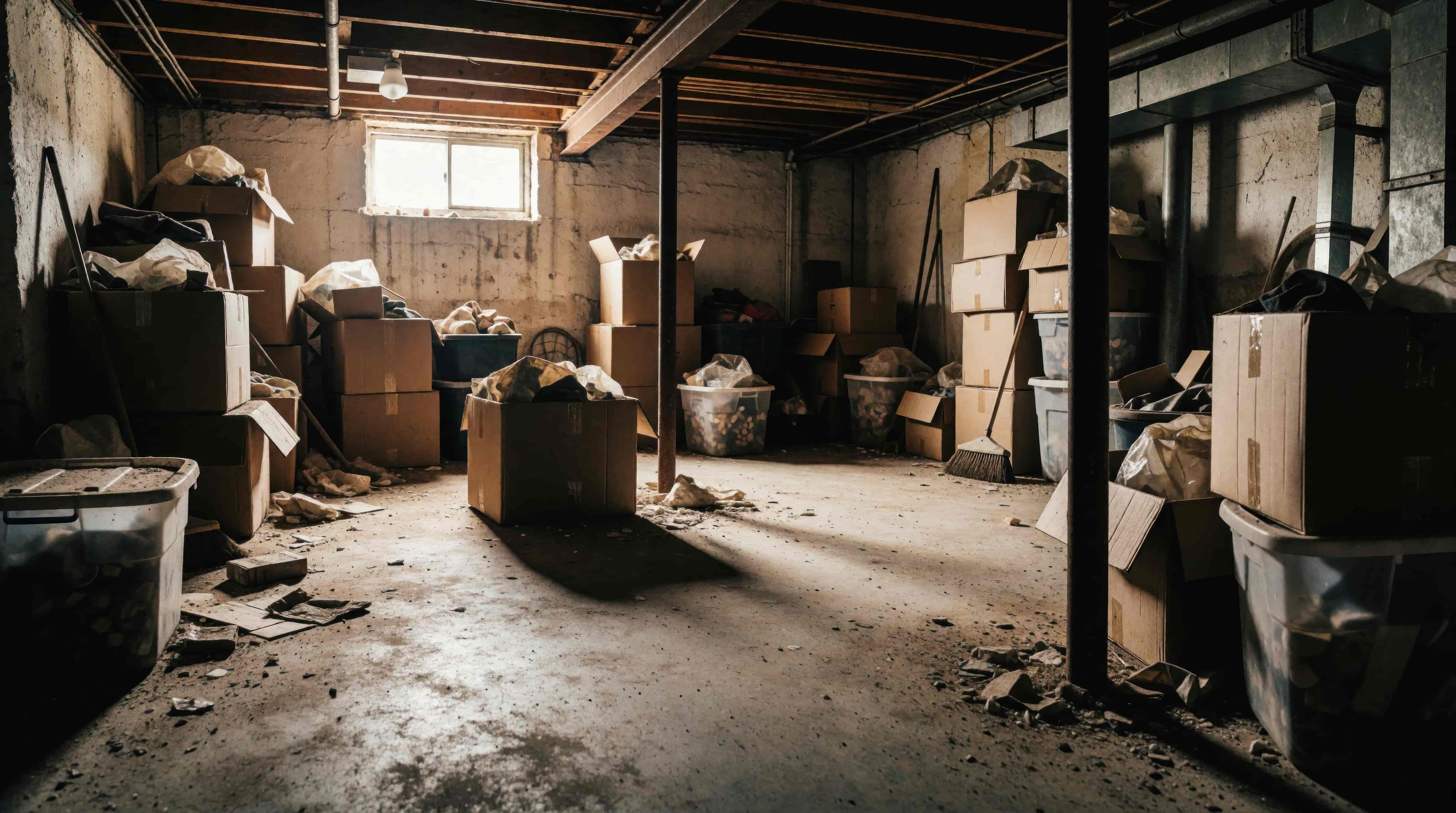
Whether you've inherited a property with decades of accumulated workshop equipment, you're preparing a garage for conversion, or you've simply outgrown your old tools — a garage workshop clearance in London is rarely as straightforward as it looks. Heavy machinery, bulky workbenches, old power tools, and mountains of assorted hardware don't just disappear on their own.
This guide covers everything you need to know: what's involved in a professional garage workshop clearance, how to handle specific items safely and legally, what it typically costs in London, and how to get the best outcome — whether that's recycling, reselling, or responsible disposal.
A garage or workshop clearance goes well beyond filling a few bin bags. It typically involves:
For many London homeowners, the challenge isn't motivation — it's the sheer physical weight and volume of the contents. A single cast iron workbench can weigh 150–300 kg. Industrial machinery can exceed half a tonne. This is not a job for a Saturday afternoon and a hired van.
London presents unique logistical challenges that make professional clearance services especially valuable:
| Challenge | Why It Matters in London |
|---|---|
| Narrow access | Terraced properties, tight driveways, and basement garages limit equipment movement |
| Parking restrictions | Loading in controlled zones requires planning and local knowledge |
| Weight and volume | Old machinery requires experienced handling and appropriate vehicles |
| Waste regulations | Fly-tipping carries fines of up to £50,000 — legal disposal is essential |
| Time pressure | London property timelines are often tight — delays are costly |
| Recycling obligations | Electrical equipment (WEEE), oils, and chemicals have specific disposal routes |
Professional garage clearance companies operating in London understand these constraints and have the vehicles, equipment, and waste carrier licences to handle them correctly.
Understanding what you're dealing with helps you plan — and helps a clearance team give you an accurate quote.
⚠️ Important: Never put hazardous workshop waste in a skip or general waste. It is illegal under the Environmental Protection Act 1990 and the Hazardous Waste Regulations 2005. A licensed waste carrier must handle these materials correctly.
Understanding the process helps you know what to expect — and what questions to ask when booking.
A reputable London clearance company will visit the property (or assess via photos/video) to understand the volume, access, item weights, and any hazardous material concerns. Quotes should be fixed-price or clearly structured, not vague estimates.
Before removal begins, items are sorted into categories:
Fixed workbenches, shelving, and racking are carefully dismantled. This protects the building structure and allows safe removal through doorways and corridors.
Machinery is moved using appropriate equipment: sack trucks, pump trucks, pallet jacks, or straps — depending on weight and configuration. In London properties with restricted access, specialist lifting equipment may be required.
All waste is loaded into licensed clearance vehicles. The team handles all aspects of parking, loading, and securing items for transport. A good clearance company will work quickly to minimise disruption to neighbours and your schedule.
Items are taken to licensed waste transfer stations or recycling facilities. Scrap metal is recycled. Working tools may be donated or resold. Hazardous materials are disposed of via specialist routes. You should receive a waste transfer note as proof of legal disposal — always ask for one.
Yes — and a good clearance team will help you identify what has value before it goes to the skip.
Items with Potential Resale Value:
Where Workshop Items Can Be Donated:
If your clearance includes items of significant value, it's worth requesting that the clearance team separates these for resale — some London clearance companies will offset this against your clearance cost.
Pricing varies based on volume, access, item weight, and hazardous material handling. Here's a realistic guide for London:
| Clearance Type | Estimated Cost Range |
|---|---|
| Small garage (partial clearance, hand tools and light items) | £150 – £300 |
| Medium garage workshop (workbench, shelving, mixed tools) | £300 – £600 |
| Full garage workshop clearance (machinery, full contents) | £600 – £1,200+ |
| Heavy machinery removal only (lathes, compressors etc.) | £200 – £500 per item |
| Hazardous waste disposal (oils, chemicals, batteries) | £50 – £200 depending on volume |
These are indicative ranges for London as of 2026. Prices vary between providers. Always obtain at least two quotes and confirm that the price includes labour, transport, and legal disposal.
Factors That Increase Cost:
Factors That Can Reduce Cost:
| Factor | DIY Clearance | Professional Clearance |
|---|---|---|
| Cost | Lower upfront | Higher upfront, lower total risk |
| Time | Days to weeks | Hours to one day |
| Heavy item handling | High injury risk | Experienced and equipped |
| Legal disposal | Your responsibility | Handled correctly |
| Hazardous waste | Often mishandled | Specialist disposal |
| Skip hire required | Yes — added cost | Usually not needed |
| Insurance | Personal liability | Company insured |
| Waste transfer note | Your responsibility | Provided as standard |
The honest verdict: For a small clearance with light items, DIY can work. For anything involving heavy machinery, electrical equipment, or hazardous materials — professional clearance is significantly safer, faster, and often not much more expensive once you factor in skip hire, van rental, disposal costs, and your time.
Use this checklist before your clearance team arrives to make the process as efficient as possible:
Any company collecting and transporting your garage waste must be registered as a licensed waste carrier with the Environment Agency. You can verify a company's registration on the Environment Agency website. Using an unlicensed carrier makes you legally liable if waste is fly-tipped.
Electrical and electronic equipment — including power tools, drills, grinders, and workshop machinery — falls under the Waste Electrical and Electronic Equipment (WEEE) Directive. These items must be disposed of at registered WEEE collection points, not in general waste.
Oils, solvents, paints, and batteries are classified as hazardous waste. Their disposal is regulated under the Hazardous Waste (England and Wales) Regulations 2005. A licensed clearance company will handle this correctly and provide documentation.
If your garage was built or refurbished before 2000, there is a risk of asbestos-containing materials in floor tiles, roof panels, or insulation. If in doubt, commission an asbestos survey before clearance begins. Disturbing asbestos without specialist handling is a serious health and legal risk.
Most residential garage clearances take between 2 and 6 hours, depending on volume and access. A large workshop with heavy machinery may take a full day. Professional teams work efficiently to minimise disruption.
Not necessarily. Many London clearance companies can work with a key holder present, or you can remain on-site. It's advisable to be available at the start to confirm what stays and what goes.
A responsible clearance company will sort items for reuse, donation, recycling, or disposal. Scrap metal is recycled. Working tools may be donated or resold. You should ask your provider how they handle different material types.
Yes — experienced clearance teams have the equipment and expertise to handle heavy machinery in restricted London properties. This may affect pricing due to the extra labour and equipment required.
Costs vary, but a full garage workshop clearance typically ranges from £300 to over £1,000 depending on contents and access. When you factor in the alternative costs of skip hire, van rental, your time, and legal disposal — professional clearance is often competitive and far less stressful.
Ask for the company's Environment Agency waste carrier licence number before booking, and always request a waste transfer note at the end of the job. This is your legal proof of responsible disposal.
At London Rubbish Clearance, we specialise in exactly this kind of clearance — the challenging, heavy, mixed-waste jobs that most general clearance services aren't equipped to handle properly.
We're fully licensed waste carriers, operating across all London boroughs. Our experienced teams are equipped for heavy machinery removal, hazardous waste handling, and tight-access London properties. We sort for recycling and reuse wherever possible, and we always provide waste transfer notes as standard.
Whether you're clearing a small suburban garage or a large workshop packed with decades of professional equipment, we can help. We offer transparent, fixed-price quotes with no hidden charges — and we can often accommodate same-week bookings.
Ready to get started? Contact London Rubbish Clearance today for a free, no-obligation quote on your garage workshop clearance. We'll assess your specific requirements and give you a clear, fair price.
London Rubbish Clearance operates across all London boroughs, offering fully licensed, insured, and responsible clearance services for garages, workshops, homes, and commercial properties. Get a free quote today.
Get a fast, free, no-obligation quote — same-day collection available across Greater London.