 07933445988
 Call Us Now!020 37450854
07933445988Call Us Now!020 37450854
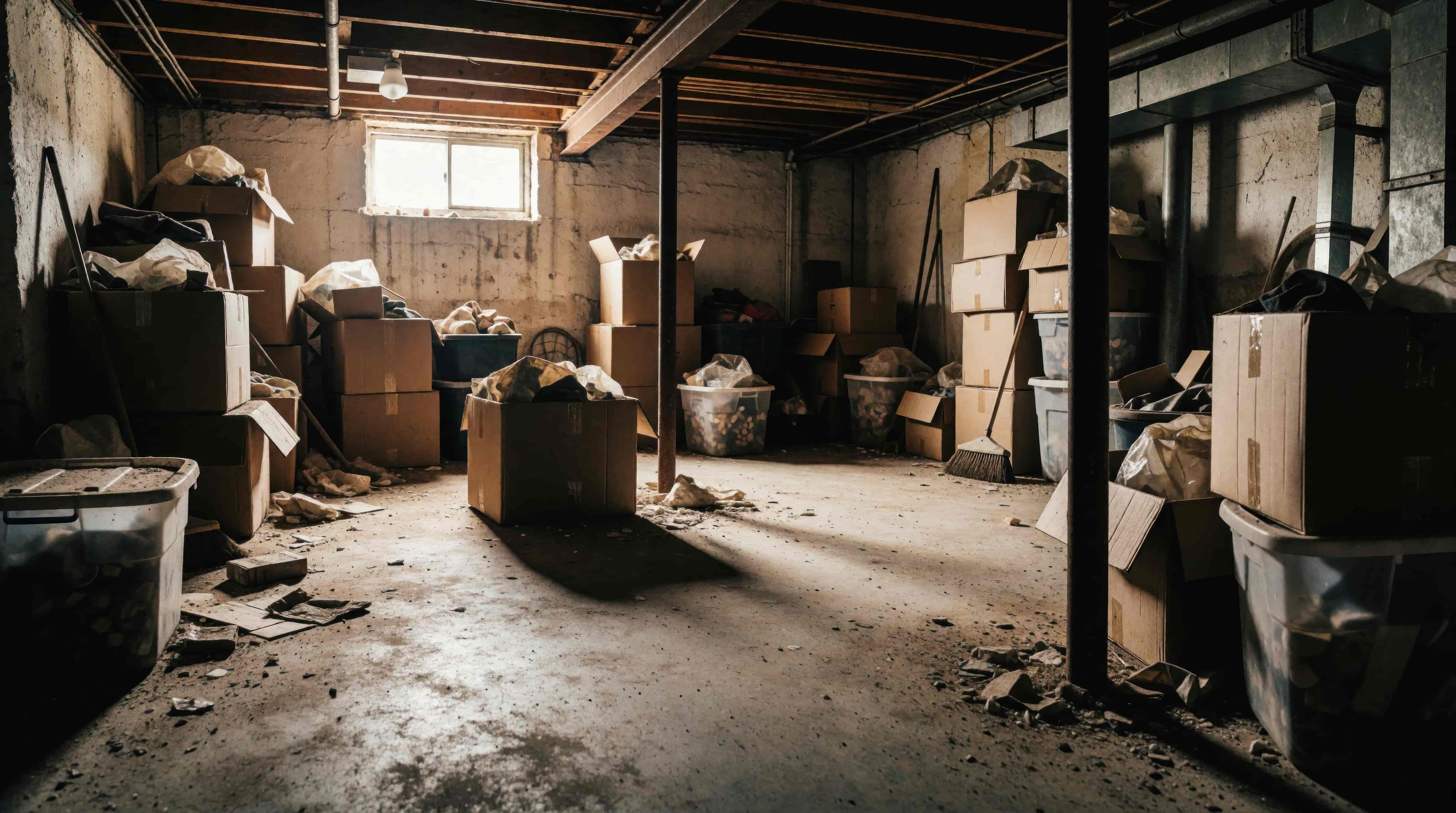
London's outdoor spaces are some of the most underutilised yet highest-potential areas in any property. Summerhouses, workshops, garden rooms, sheds, and garages quietly accumulate decades' worth of belongings — from rusted garden tools and broken furniture to old paint tins and forgotten sports equipment. When the time comes to clear them out, most London homeowners quickly realise the scale of the task is far greater than anticipated.
Whether you're preparing a garden room for conversion, clearing a deceased relative's workshop, reclaiming a summerhouse for summer entertaining, or getting a property ready for sale, professional outbuilding clearance in London offers a faster, safer, and more responsible solution than DIY disposal.
This guide covers everything you need to know: what outbuilding clearance involves, what items are typically found, how to prepare, what it costs, and how to choose a reliable London clearance company.
Quick answer: Outbuilding clearance in London typically costs £50–£350 for a shed or summerhouse and £300–£600 for a large workshop or garage, depending on volume, access and any hazardous waste. Most jobs take two to four hours, and same-day collection is often available. Pre-2000 outbuildings should be checked for asbestos first, and you should only use a registered waste carrier who gives you a waste transfer note.
Outbuilding clearance is the professional removal of all unwanted items, waste, and accumulated clutter from structures located outside the main dwelling — including summerhouses, garden rooms, workshops, sheds, garages, greenhouses, and stables.
Unlike standard rubbish removal, outbuilding clearance is a specialist service. It requires careful handling of bulky items, potentially hazardous materials (such as old chemicals, asbestos-containing panels in older structures, or fuel canisters), and mixed waste streams that must be segregated and disposed of responsibly in line with UK waste legislation.
A professional outbuilding clearance service in London will typically:
London properties are characterised by limited space, high property values, and a growing trend towards making every square metre count. Garden rooms and summerhouses have never been more popular — driven by the work-from-home revolution and the demand for home gyms, studios, and entertainment spaces.
We see this most in boroughs with larger gardens, such as Ealing, Richmond upon Thames, Barnet, Bromley, Croydon, and Hounslow, where Victorian and inter-war homes often have long-neglected sheds, workshops, and summerhouses at the end of the garden.
However, before an outbuilding can be repurposed, sold, let, or demolished, everything inside it must be cleared. Common reasons London residents book outbuilding clearance include:
| Reason | Description |
|---|---|
| Property sale or purchase | Sellers need to clear outbuildings before completion; buyers want a blank slate |
| Garden room conversion | Repurposing a summerhouse into a home office or gym |
| Probate and estate clearance | Clearing a deceased person's workshop or shed |
| End of tenancy | Landlords clearing outbuildings between tenancies |
| Renovation or extension | Clearing outbuildings ahead of construction work |
| General decluttering | Reclaiming usable outdoor space |
| Outbuilding demolition | Preparing a structure for removal or replacement |
Summerhouses often contain garden furniture, barbecue equipment, children's toys, decorative items, and seasonal gear. Over the years, they become informal storage for anything that doesn't fit in the house. A professional clearance team can remove all contents efficiently, often within a few hours.
Workshops present unique clearance challenges. They frequently contain heavy workbenches, power tools, hand tools, shelving units, timber offcuts, lubricants, solvents, and waste materials. Bulky offcuts and old workbenches can go through wood waste collection for recycling, while items such as old chemicals, aerosols, and flammable substances need proper hazardous waste disposal. This is not a job suited to a standard skip hire.
Garden rooms — purpose-built insulated structures increasingly popular in London — may need clearing before renovation, resale, or repurposing. Contents vary widely, from office furniture and electronics to gym equipment and entertainment systems.
Garages in London often double as general storage units. They commonly hold bicycles, old appliances, boxes of household items, car parts, tyres, and tools. Garage clearance is one of our most frequently requested services across all London boroughs.
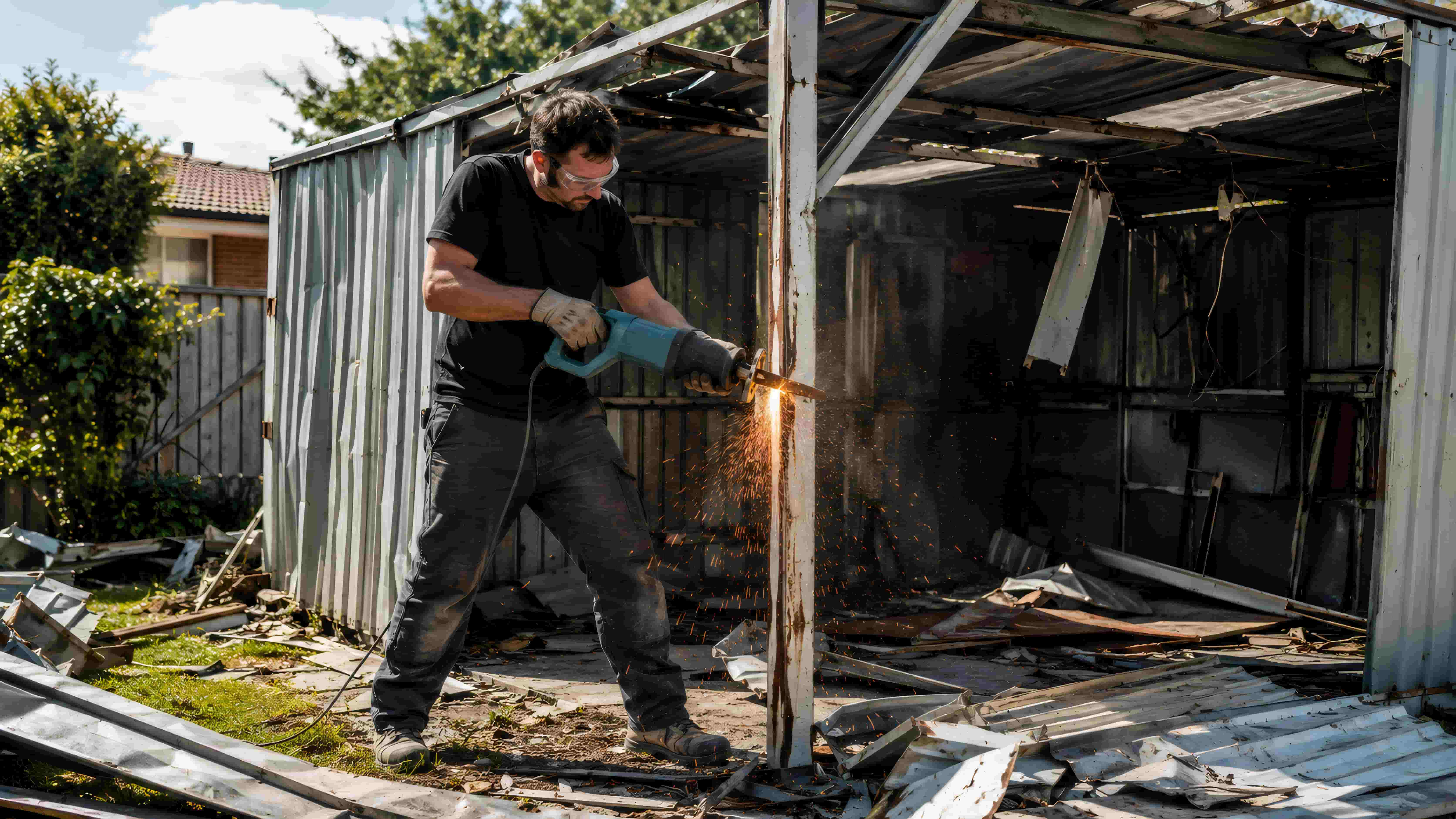
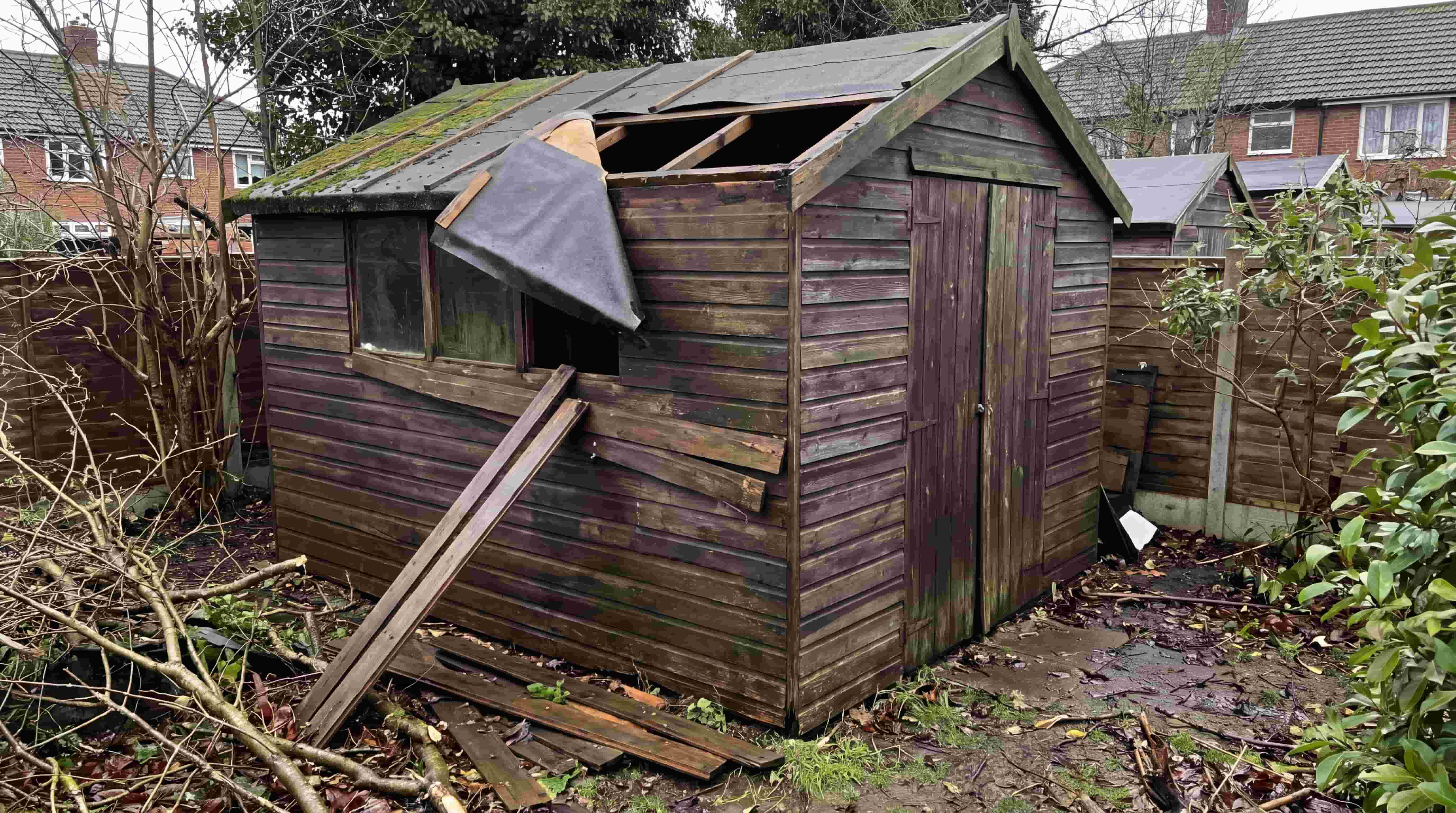
Even a standard garden shed can hold a surprising volume of waste. Lawnmowers, strimmers, compost bags, plant pots, broken garden furniture, and years of miscellaneous storage all need sorting and removing. If the shed itself has had its day, a shed removal service can dismantle and take away the structure at the same time.
Greenhouses require delicate handling — both for the structure itself and the contents, which may include old growing media, plant pots, broken glass, irrigation equipment, and chemical fertilisers. Greenhouse clearance is often combined with a wider garden clearance to deal with overgrowth, green waste, and outdoor rubbish in one visit.
Understanding what's commonly found helps set realistic expectations — and underscores why professional clearance is advisable:
Garden and Outdoor Items
Workshop and DIY Items
General Storage
Hazardous Materials (Require Specialist Disposal)
Important: If your outbuilding was built before 2000, it may contain asbestos in roofing panels, insulation, or floor tiles. A professional clearance company will identify risks and advise on appropriate specialist removal. Never attempt to break up or dispose of suspected asbestos materials yourself.
A professional outbuilding clearance service follows a structured process to ensure safety, efficiency, and legal compliance:
A reputable London clearance company will assess the outbuilding — either in person or via photos and description — and provide a transparent, itemised quote. There should be no hidden charges.
Once agreed, a clearance date is booked. London Rubbish Clearance offers same-day or next-day availability for urgent situations.
On the day, the clearance team sorts items into categories: items suitable for donation or reuse, materials for recycling, and genuine waste for disposal. Responsible companies aim to minimise landfill.
All items are removed from the outbuilding and loaded onto the clearance vehicle. Teams are equipped to handle heavy, bulky, or awkward items safely.
Waste is transported to a licensed waste transfer station. Recyclable materials are separated, and hazardous waste is handled via appropriate specialist channels.
You receive confirmation that the clearance is complete. A reputable company will provide a waste transfer note — your legal proof that waste has been disposed of responsibly. Keep this document safe.
Outbuilding clearance in London starts from around £50 for a small load and rises with volume, accessibility, type of waste, and location within London. As a general guide:
| Outbuilding Size / Type | Approximate Cost Range |
|---|---|
| Small shed (up to 6x4ft) | £50 – £150 |
| Standard shed or summerhouse | £150 – £350 |
| Large workshop or garage | £300 – £600 |
| Full outbuilding estate clearance | £400 – £1,000+ |
| Outbuilding with hazardous waste | Additional charges apply |
Note: These are indicative ranges. Always request a bespoke quote based on your specific outbuilding, its contents, and your location within London. Central London and areas with limited vehicle access may incur additional charges.
What affects the price?
| Factor | DIY Clearance | Professional Clearance |
|---|---|---|
| Cost | Lower upfront | Higher upfront, but includes labour and disposal |
| Time | Multiple weekends | Typically one day or less |
| Legal compliance | Your responsibility | Handled by licensed professionals |
| Hazardous waste | Risky if mishandled | Properly managed |
| Physical effort | High | Minimal — team does the work |
| Recycling rate | Varies | Professional companies achieve high recycling rates |
| Stress | High | Low |
DIY clearance is viable if: The outbuilding contains a small volume of non-hazardous items, you have time and physical capability, and you can arrange legitimate disposal (not fly-tipping, which is illegal and carries substantial fines).
Professional clearance is recommended if: The volume is large, the content includes hazardous materials, you're working to a deadline, or you're managing a probate or tenanted property clearance.
Use this checklist to ensure your clearance goes smoothly:
Fly-tipping is a serious issue across London, with local authorities spending millions each year dealing with illegally dumped waste. Under the household waste duty of care (Section 34 of the Environmental Protection Act 1990), you have a legal duty to ensure anyone who takes your waste is a registered waste carrier — and you can be fined if your waste is fly-tipped by an unlicensed operator.
Key environmental commitments to look for:
At London Rubbish Clearance, we are fully licensed waste carriers committed to responsible, eco-conscious disposal across all London boroughs.
Not all clearance companies are equal. Here's what to look for:
✅ Valid Waste Carrier Licence — Verify on the Environment Agency public register
✅ Transparent, written quotes — No hidden charges or unexpected extras
✅ Experience with outbuilding clearance — Not just general rubbish removal
✅ Positive reviews — Check Google, Trustpilot, and local directories
✅ Insurance — Public liability insurance protects you in the event of damage
✅ Flexible scheduling — Including weekends and urgent bookings
✅ Clear recycling policy — Ask about their landfill diversion rates
🚩 Red flags to avoid:
Most outbuilding clearances in London take two to four hours. A single shed or summerhouse is often cleared in under an hour, while a large workshop or several outbuildings may take a full day. Same-day clearance is often available.
Outbuilding clearance in London starts from around £50 for a small shed load. A typical shed or summerhouse costs £150–£350, and a large workshop or garage £300–£600. Hazardous waste, difficult access, or urgent bookings can add to the price. Send photos for a fixed, no-obligation quote.
Yes. Once the contents are cleared, the team can dismantle and remove timber, metal, or plastic sheds and summerhouses. Wood and metal are separated for recycling. Concrete bases and pre-2000 structures with suspected asbestos roofing need assessing first.
Not necessarily. Many clients provide access and allow the team to work independently. However, we recommend being available at the start to walk through the outbuilding and confirm what should and shouldn't be removed.
Usable furniture, tools, and garden equipment are set aside for donation to local charities, reuse schemes, or resale. Recyclable materials such as timber, metal, and cardboard are separated, so as little as possible goes to landfill.
Suspected asbestos must be handled by a licensed asbestos removal contractor before the general clearance goes ahead. We can advise on this and recommend appropriate specialists. Never attempt to disturb or remove suspected asbestos yourself.
Always ask for a waste transfer note when the job is finished. It is your legal proof that the waste was handed to a registered waste carrier and disposed of properly. Without one, you could be held responsible if your waste is fly-tipped.
Yes. London Rubbish Clearance covers all 32 London boroughs and the City of London, including North, South, East, West, and Central London.
If you have a summerhouse, workshop, garden room, shed, or garage in London that needs clearing, London Rubbish Clearance is ready to help. We offer:
👉 Request your free outbuilding clearance quote today — just send a few photos of your outbuilding and reclaim your outdoor space.
📞 Call us on 020 37450854 or book online for fast outbuilding clearance anywhere in London.
Get a fast, free, no-obligation quote — same-day collection available across Greater London.